
KEY TAKEAWAYS
The following is an edited transcript of a video interview between Lillian Freiberg, Head of North America at Clarity AI, and Austin Ritzel, Clarity AI’s lead for special projects and AI strategy.
Lillian Freiberg: Hey everyone, thanks for listening in. I’m Lillian Freiberg, I lead North America for Clarity AI, and I’m back again with Austin Ritzel, Clarity AI’s Head of Special Projects and AI Strategy. Today we’re getting into how AI and energy became the same story, why it’s a bipartisan fight, what China is doing differently, and where the money is going. As always, it’s good to have you.
Austin Ritzel: Thanks, Lillian. It’s a pleasure to be here.
How AI and Energy Became the Same Story
Lillian: Let’s get right into it. What’s actually changed? Six months ago, AI and the energy transition were basically two separate stories — energy was a climate story, AI was a tech story. Why did they suddenly become the same conversation?
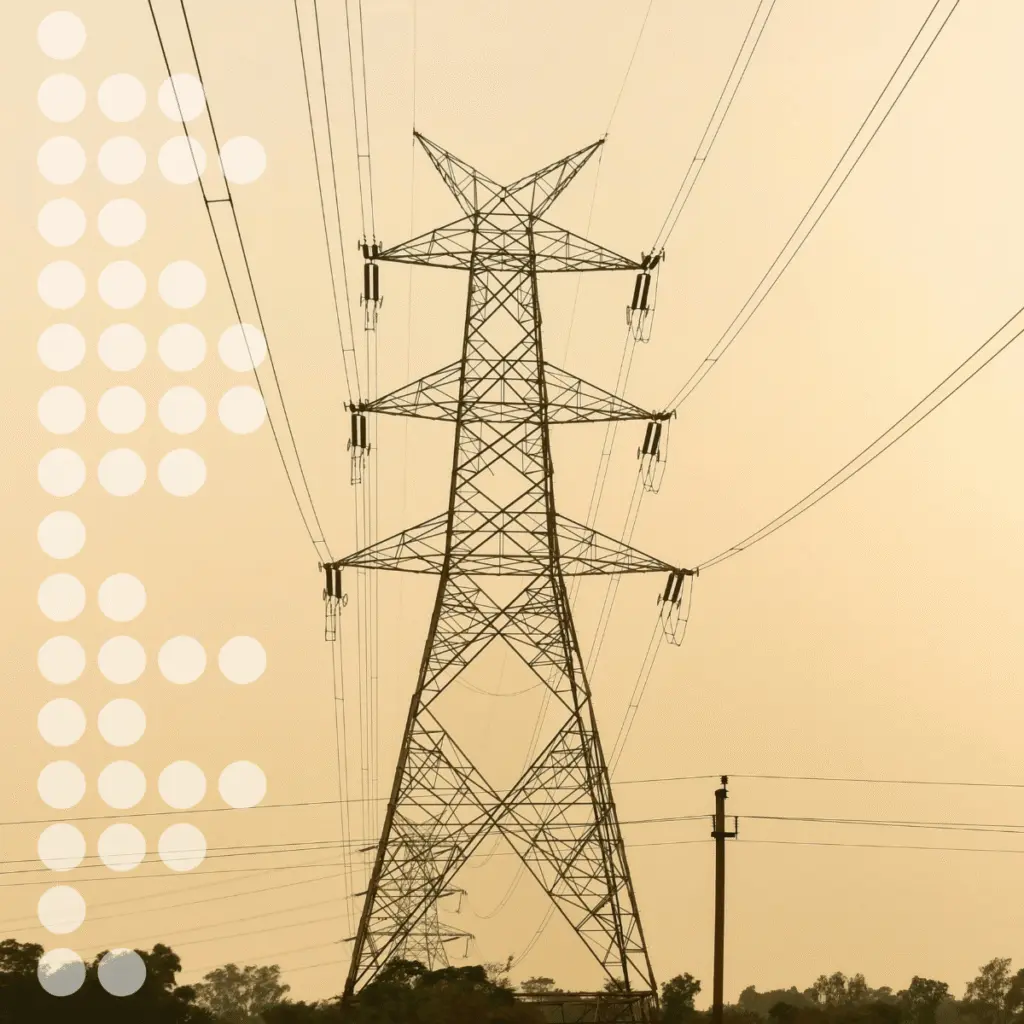
Austin: Because they now share the same bottleneck. NVIDIA’s Jensen Huang describes AI as a five-layer cake, and the first layer, the one that really sets the ceiling, is energy. AI, at its most fundamental level, is the conversion of electrons into tokens into intelligence. So underneath all the shiny models and chips we love talking about, the AI race is fundamentally an electricity race. We call that the physical governor: adoption is bound by electricity, grid capacity, and semiconductors.
A few years ago, the energy transition was fundamentally a climate story. It’s still very much that, but it’s now also an urgent industrial capacity story. AI’s energy usage represents a few percentage points of total US electricity demand today, but that figure is growing very fast. Studies suggest data centers will account for somewhere around 12% of total US electricity demand by 2030. That might not sound like much until you consider that US electricity demand has grown by less than 0.4% annually over the last decade. So we’re looking at implied growth rates an order of magnitude higher than that, and there are massive challenges to building out capacity at that clip.
“AI, at its most fundamental level, is the conversion of electrons into tokens into intelligence. So underneath all the shiny models and chips we love talking about, the AI race is fundamentally an electricity race.”
And then there’s the ratepayer. If a data center is connected to the grid, supply and demand dictates that American ratepayers will indirectly pay for that usage, and that can mean eye-watering bill increases, particularly in areas with high data center density, like Data Center Alley in Virginia, where electricity prices have jumped more than 200%.
Lillian: And it’s not just aggregate, right? As you said, this is hitting actual electric bills in places like Virginia, which is why it’s a kitchen-table issue now, not just a climate one.
Why AI and Energy Is a Bipartisan Fight
Lillian: That leads directly into my next question. What does it say that this administration and Bernie Sanders are worried about the exact same thing?
Austin: It reflects the fact that the backlash is genuinely bipartisan. Just 28% of US voters view AI in a favorable light, less favorable than almost any political institution you can name. As James Carville famously said, “it’s the economy, stupid”. Whether it’s energy bills or employment anxiety, responding to constituents’ economic concerns about AI just makes policy sense, regardless of political or ideological leaning.
There’s also a uniting national security and sovereignty concern. AI has huge geopolitical implications. The components of its physical substrate are scattered across the world. The Netherlands for lithography, Taiwan for semiconductors, China for rare earths, the US for GPU design, and more. Pretty much everyone can agree on the need to secure that supply chain.
Lillian: It’s rare to see the “build faster” camp and the “slow down” camp both this loud at once, which makes China’s quieter approach even more interesting. I caught Aniket Shah speaking at USIF in DC a few weeks ago: it seems like this is the next big issue to rock the space.
“Whether it’s energy bills or employment anxiety, responding to constituents’ economic concerns about AI just makes policy sense, regardless of political or ideological leaning.”
What China Is Doing Differently
Lillian: So, focusing there… Call this the tale of two countries. The US has, diplomatically put, tension around this. What’s China actually doing differently from the West?
Austin: In many ways, China is running the mirror image of the US strategy. On the physical substrate side, the US has the leading chips but struggles to add electricity; China struggles for chips but is winning the energy race. China is very well-heeled in rapid energy expansion, a consequence of the exponential growth in consumer demand that’s come with the country’s development. It has the muscle needed for this buildout.
On the model side, and this is an oversimplification, but China is focused on architectural and engineering efficiency rather than pushing the absolute frontier of intelligence, which has historically been the US’ primary focus. Chinese labs have also received heavy subsidies and price intelligence near marginal cost to drive adoption and broad diffusion. The result is that these open-weight Chinese models are much cheaper than closed-weight US frontier models.

Historically, the status quo has been that US models enjoy at least a 12-month capability lead over their Chinese counterparts, but at a much higher price. That said, many in the audience will be aware of the recent release of Moonshot’s Kimi K3 model. There’s still a lot to digest about how it performs in the real world, but it demonstrates that even that gap between US and Chinese frontier capabilities is shrinking.
Lillian: So, a loud fight here in the US and a quiet strategy in China. I think that split shows up in the markets too.
Austin: That’s really your world, Lillian. I think it’s interesting for the audience to understand where capital is actually placing its bets in a fight like this.
The 2026 Guide to Navigate AI Adoption in Regulated Workflows.
Download Guide
Where Capital Is Placing Its Bets
Lillian: Here’s what surprised me: all through 2025, Washington was in this loud fight, and clean energy stocks still had one of their best years ever. The S&P Global Clean Energy Index was up nearly 50%, versus under 20% for the broader market. Think about that comparison.
So it’s not really a “Washington getting friendlier” story — it’s AI power demand and the capital chasing it. Bloom Energy, for example, is up more than 300% this year on its Oracle deal, and Brookfield’s fuel cell financing with Bloom just grew to a full $25 billion. The electrons are getting too valuable to ignore.
Is it durable? That’s where things get genuinely contested. Remember the DeepSeek moment, when a cheap model got released, and these stocks tanked overnight? There’s a real rally and a real thesis here; it’s just a lot more fragile than it looks.
Austin: The natural follow-up question, Lillian, is what does that mean for the people actually making decisions in this ecosystem?

What This Means for Decision-Makers
Lillian: From what I’m seeing from the Clarity AI vantage point: in a market this contested, generic claims don’t mean much anymore. What matters is more granular, more current data — emphasis on current — by facility, by contract level, by jurisdiction. Not a once-a-year average like it used to be. That takes real infrastructure built into how someone actually decides. It’s not a static report anymore; we’ve moved far beyond that. It’s not about the label you’re wearing; it’s whether you can produce data you trust fast enough to act on. That’s the real game-changer.
“In a market this contested, generic claims don’t mean much anymore. What matters is more granular, more current data”
Austin: And I think it’s probably a tighter needle to thread than most firms would prefer to admit. The idea that electrons have gotten too valuable to ignore will stick with me. I think many in our ecosystem would do well to remember that phrase.
Lillian: I’m honored to be the one with the quotable line today. Austin, thanks for making this make sense, as usual. If anything here has sparked a question, reach out, we’d love to keep the conversation going. Thanks so much.
Austin: Thanks.
Author Information