
Stop Screening Blind. Start Screening Smart.
Clarity, Control, and Confidence in Every Screen
Apply tailored exclusion criteria with detailed, revenue-based data, so you can align investments with values, mandates, and risk tolerance.
Trusted by Leading Financial Institutions










The Challenge Isn’t Screening, It’s Doing It Right
Our Solution, at a Glance
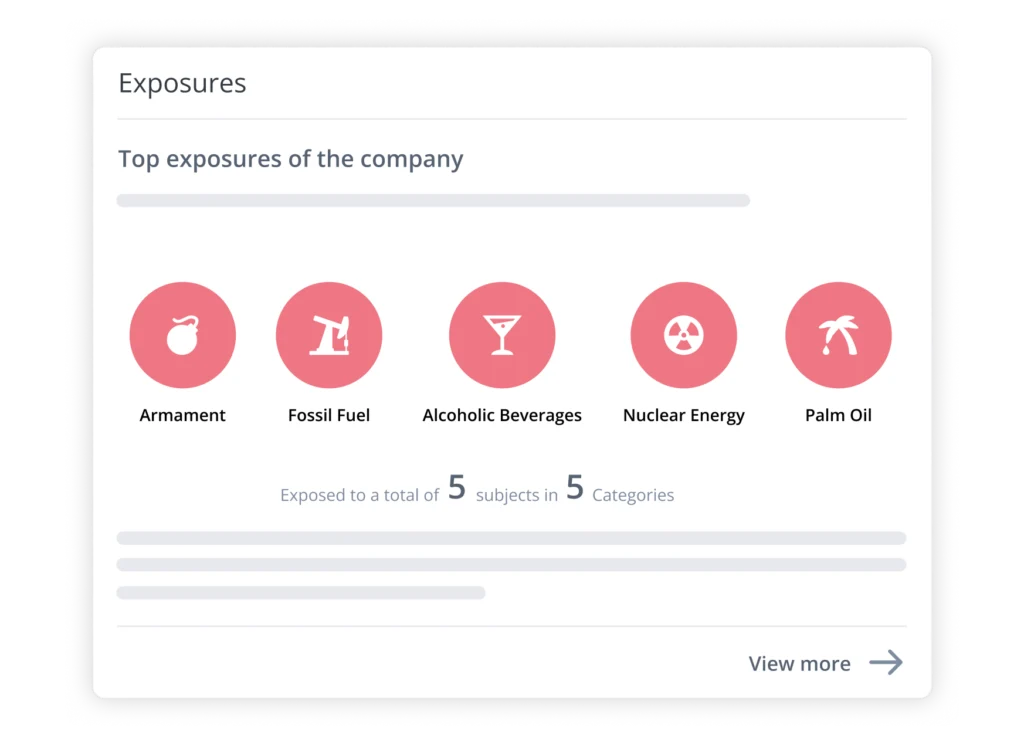
Clear, Customizable, Credible Exposures
Apply Exclusions Across a Broad, Detailed Universe
Designed to support exclusion policies across industries and themes:
- 45,000+ companies across sectors and geographies
- 19 categories and 55 sub-topics for more precise screening
- Captures both direct and indirect involvement

Remove Ambiguity with Granular Data
Built to reduce false positives and avoid unnecessary exclusions:
- Exact or best estimate percentage of a company’s involvement in controversial activities
- Revenue data at sub-topic level for higher accuracy
- Custom thresholds to define exposure relevance

Back Every Decision With Verifiable Evidence
Structured to make your exclusions traceable and explainable:
- Access to source documents like reports and company websites
- Visibility into estimation methodology when applied
- Clear documentation to support internal and external reporting

What We Stand For
AI You Can Rely On. Data You Can Defend.
AI That Powers Smart, Scalable Screening

Data That Holds Up to Scrutiny

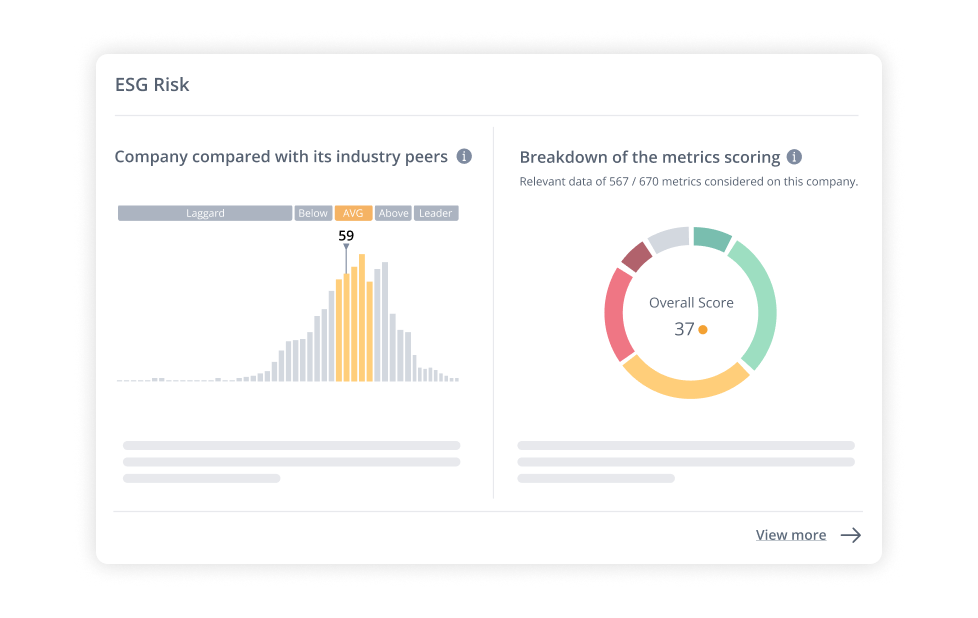
Beyond ESG Risk
Enhance Your Sustainability Risk Analysis Even Further
ESG Scores
UN SDGs

ESMA Naming Rules

Screening That Fits Every Workflow
Implement Exclusions With Confidence
Clarity AI helps asset managers apply exclusion policies across portfolios with transparent, data-driven exposure insights. Granular revenue data and flexible thresholds enable more informed decisions without over-screening or sacrificing alignment with investment mandates.
Learn More
Monitor and Enforce Screening Policies at Scale
Asset owners can evaluate portfolio exposure to controversial sectors and track direct and indirect involvement with precision. With standardized, revenue-based insights, it’s easier to stay aligned with sustainability commitments and manage reputational and financial risk.
Learn MoreSupport Client Preferences With Clear, Defensible Data
Clarity AI helps wealth managers report on exposure to restricted sectors with full transparency. With granular insights, they can align portfolios with client values, ensure ethical standards, and meet screening requirements without overcomplication.
Learn MoreStrengthen Risk Management Across Portfolios
Banks can assess company involvement in restricted activities and align investment and lending decisions with internal policies and regulatory requirements. Granular exposure insights bring transparency and consistency to ESG risk assessments.
Learn MoreFAQs
Lorem ipsum dolor sit amet, consectetur adipiscing elit, sed do eiusmod tempor incididunt ut labore et dolore magna aliqua.
Contact UsWhat insights does the Exposures solution provide?
Clarity AI provides revenue-based data on company involvement in 15 categories and 47 sub-topics such as fossil fuels, defense, alcohol, and tobacco. This helps investors align portfolios with exclusion policies, values, and regulatory requirements.
Where does the exposures data come from?
Our team collects data from annual reports, regulatory filings, company websites, NGOs, media search tools, and business directories. We also use AI-driven methods like large language models (LLMs) to enhance coverage and reliability.
How much of the data is estimated?
Many companies don’t report the data needed for business involvement screening. We provide full transparency by clearly indicating whether each data point is reported or estimated. Reported data includes the source and a direct link to the evidence. For estimated data, we offer links to supporting sources and a clear explanation of the estimation methodology.
Can I use Exposures data in a broader mandate?
Yes, the data is accessible through our web app and via APIs and data feeds, making it easy to combine it with other datasets for more in-depth screening within your existing workflows.
How does Clarity AI handle direct vs. indirect exposure?
We distinguish between companies directly generating revenue from a flagged activity and those indirectly involved through ownership or supply chains. This level of granularity helps avoid over-exclusion and supports more precise screening aligned with your investment policies.
Research and Insights
Latest news and articles
EBA Pillar 3 and Climate Stress Testing: What Changes for EU Banks
The EBA's new Pillar 3 ESG rules reach every EU bank, and climate joins the 2027 stress test. Here's what changes, who is in scope and when it applies.

ESG Ratings Regulation: what investors should ask now
The EU ESG Ratings Regulation is live. Learn what has changed for investors, where ESMA authorisation stands and the key questions to ask your rating providers.

The Target-CapEx Disconnect: Why Climate Pledges Don’t Equal Transition Financing
Ambitious climate targets barely lift green CapEx: 27% vs 25% for companies with no target. Economics, not pledges, drive transition spending.