
See Where Physical Risk Hits Your Investments
Asset-level precision. Financial impact. Full explainability.
Pinpoint where climate hazards translate into real financial loss. Clarity AI's bottom-up physical risk solution covers 3 million assets across 17,000+ companies, with full explainability from individual asset to portfolio level.
Trusted by Leading Financial Institutions










Broad Coverage, Same Blind Spots
Our Solution, at a Glance
Physical Risk, Fully Quantified
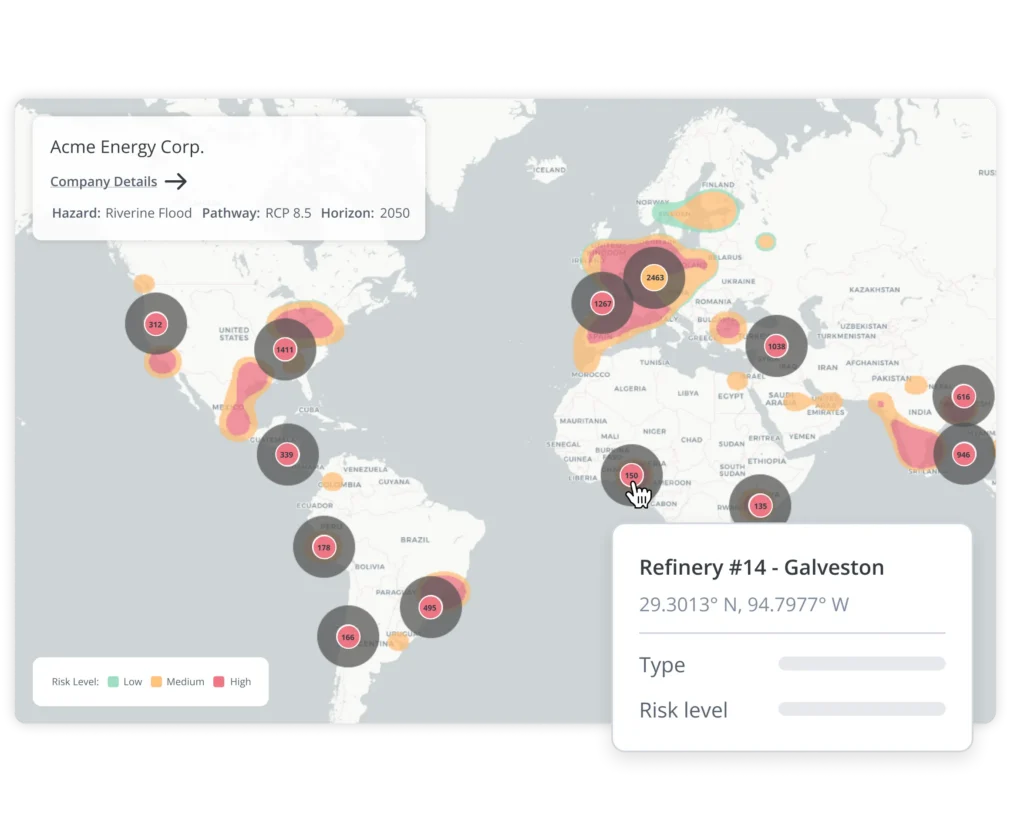
Map Where Climate & Nature Risk Becomes Financial Loss
Access over 3 million assets across 17,000+ companies:
- 16 hazards covered, across climate and nature
- On-demand coverage for assets you provide
- Financial impact quantified
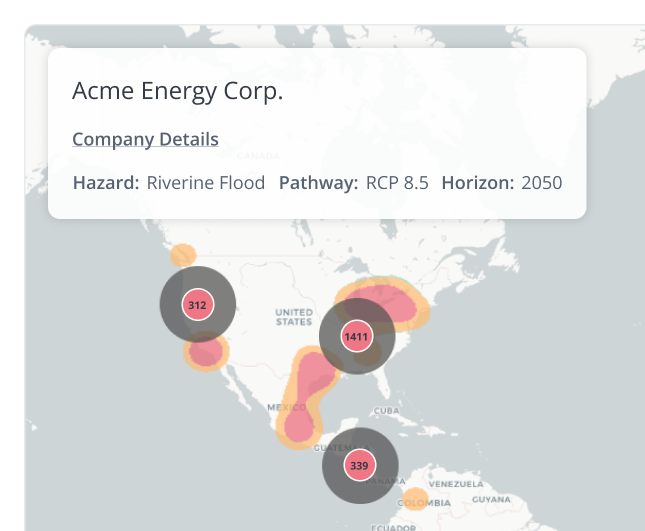
Trace Risk From Individual Asset to Portfolio Level
Analyze physical risk at every level - asset, company, fund, and portfolio:
- Full fund look-through retained at every level
- Hazards stay disaggregated through the roll-up
- Ready for disclosure under TCFD, ISSB, FINMA, and Pillar III
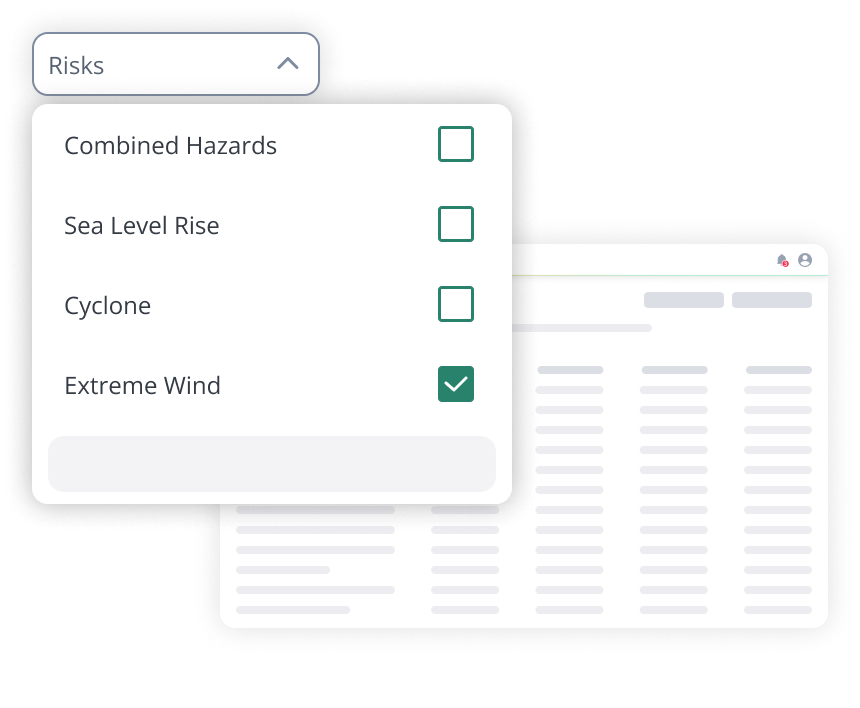
Model Risk With a Methodology You Can Defend
Built on RiskThinking.AI's science, validated by regulators including Canada's authority:
- 9 climate scenario options including IPCC and NGFS
- 5 time horizons from 2030 to 2050
- Full probability distributions, including tail risks

Two Approaches to Climate Risk
A Complete View of Physical Risk Requires Both Lenses
Systemic Risk Meets Real-World Relevance

Beyond Physical Risk
Factor Different Metrics Into Your Risk Assessment
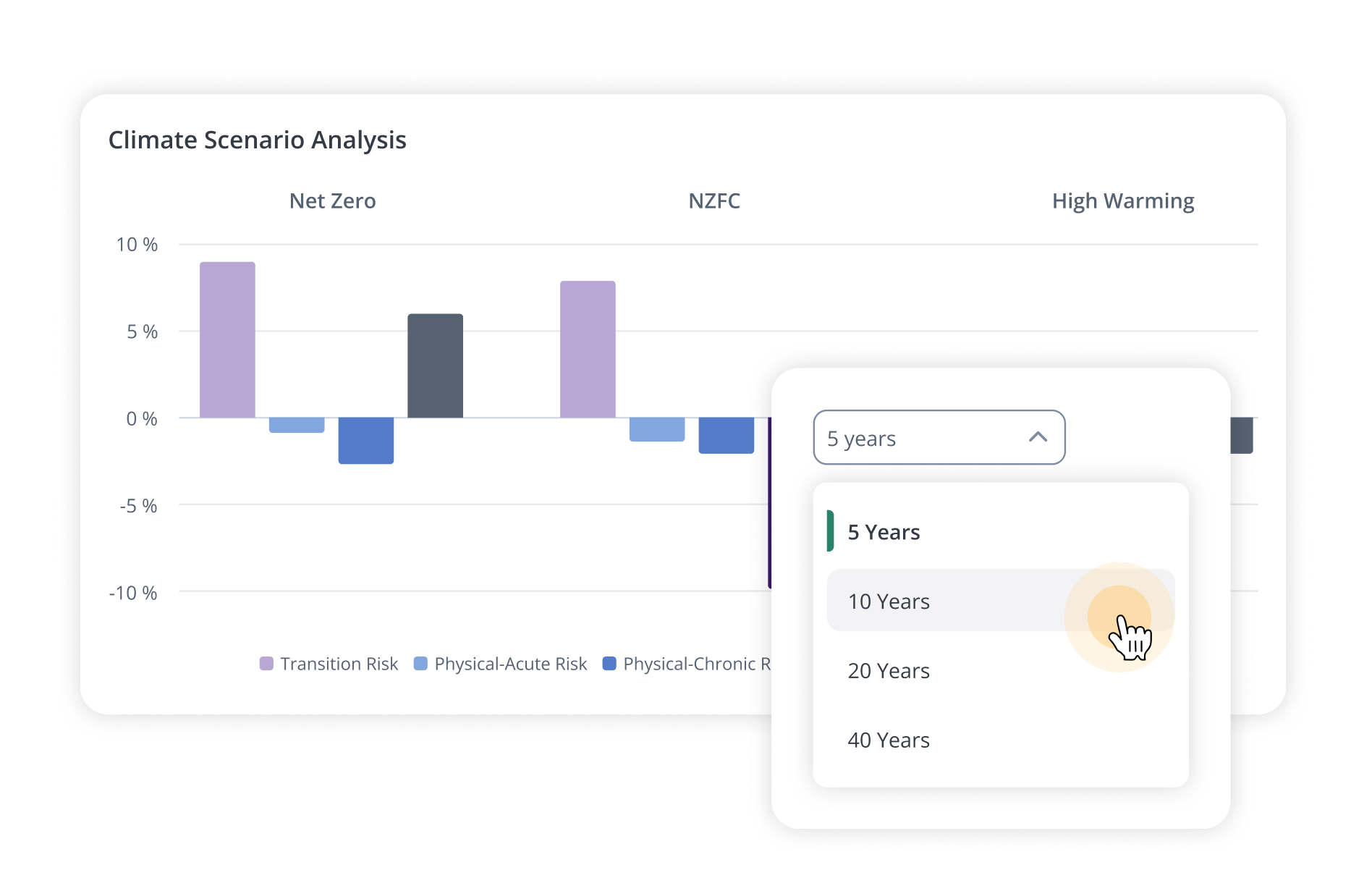
Climate Scenario Analysis
Nature and Biodiversity

Climate Transition

One Solution for Every Use Case
Physical Risk Intelligence for Every Financial Institution
Strengthen Portfolio Resilience
Identify companies in your portfolio most exposed to physical risks and understand what drives their exposure at the asset level. Use disaggregated hazard data to support engagement, manage concentration risk, and meet disclosure requirements.
Learn More
Steer Strategy With Asset-Level Evidence
See physical risk exposure across your full investment universe, including funds of funds, with look-through retained at every level. Understand the drivers behind the numbers and engage managers with asset-level evidence.
Learn MoreIntegrate Physical Risk Into Lending Decisions
Spot physical risk concentration across counterparty asset locations in your loan book. Meet EBA Pillar III or Bank of England requirements with a streamlined, asset-level dataset, including on-demand coverage for assets you provide.
Learn MoreFrequently asked questions
Lorem ipsum dolor sit amet, consectetur adipiscing elit, sed do eiusmod tempor incididunt ut labore et dolore magna aliqua.
Contact UsHow does this differ from Clarity AI's Climate Scenario Analysis?
Climate Scenario Analysis is a top-down approach that models portfolio-level return impacts under different warming and policy scenarios. The physical risk solution is bottom-up: it maps hazard exposure at individual asset locations and rolls it up to company, fund, or portfolio level. The two approaches answer different questions and are designed to work together.
What climate scenarios and hazards are covered?
The solution covers 9 scenario options including IPCC and NGFS, 16 hazards across climate and nature, and 5 time horizons from 2030 to 2050. Further long-term horizons are available on request.
As a bank, can I add my own asset data?
Yes. Banks can complement our standard coverage of 17,000+ counterparties with their own loan book asset data. We calculate physical risk exposure for any asset or group of assets provided, on demand.
How is the solution delivered?
The solution is available via datafeed now. A web app with an interactive hazard map is available from July 2026.
Research and Insights
Latest news and articles
EBA Pillar 3 and Climate Stress Testing: What Changes for EU Banks
The EBA's new Pillar 3 ESG rules reach every EU bank, and climate joins the 2027 stress test. Here's what changes, who is in scope and when it applies.

ESG Ratings Regulation: what investors should ask now
The EU ESG Ratings Regulation is live. Learn what has changed for investors, where ESMA authorisation stands and the key questions to ask your rating providers.

The Target-CapEx Disconnect: Why Climate Pledges Don’t Equal Transition Financing
Ambitious climate targets barely lift green CapEx: 27% vs 25% for companies with no target. Economics, not pledges, drive transition spending.