

Listen on your favourite network:



Stewardship has long been a cornerstone of responsible investing. But as political pressure builds, legal risks grow, and performance demands intensify, stewardship is facing a credibility test. Some are now asking: is it really moving the needle on sustainability?
Few initiatives capture this tension more than Climate Action 100+. Launched with high expectations, the coalition became a symbol of what collaborative investor action could achieve. But several years in, the results are mixed.
While it has advanced corporate disclosure and board-level climate governance, critics argue it has fallen short of driving real-world decarbonization. As Lorenzo puts it, in the broader context of advancing sustainability, “there’s a sense that this initiative has failed.”
Meet the Experts

Lorenzo Saa
Chief Sustainability Officer
Clarity AI
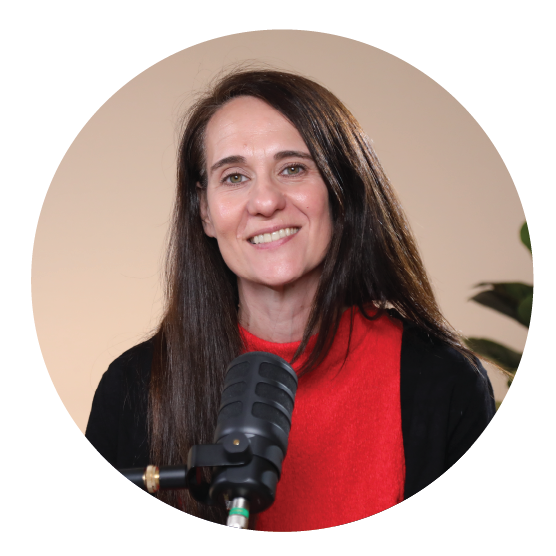
Valeria Piani
Head of Stewardship
Phoenix Group
In this episode of Sustainability Wired, Valeria Piani, Chair of the Climate Action 100+ Steering Committee and Head of Stewardship for Phoenix Group, tackles those critiques head-on as she explores the role of stewardship in sustainability, what it can realistically achieve today, and what might need to change.
With two decades of experience, Valeria offers a nuanced view on what good stewardship looks like in practice, and why asset owners must get better at demanding it from managers. She argues for precision over volume, results over rhetoric, and trust-based relationships that lead to real “click moments” with companies.
The conversation ranges from the practical to the philosophical: how investors define success, when to escalate, how to balance collaboration and confrontation, and where AI fits into the future of active ownership.
Listen now to hear the full conversation.
Key Moments
| 00:00 – 00:39 | Introduction |
| 00:40 – 01:15 | Stewardship and Sustainable Investment |
| 01:16 – 05:08 | Introduction to Valeria Pinia |
| 05:09 – 08:55 | What are active ownership and stewardship? |
| 08:56 – 10:21 | Choosing the right engagement tools |
| 10:22 – 12:16 | What is stewardship trying to achieve? |
| 12:17 – 14:32 | When should asset owners engage or delegate? |
| 14:33 – 17:22 | Best (and worst) experiences with engagement |
| 17: 23 – 21:21 | Real world examples of engagement |
| 21:22 – 24:13 | Solo or collaborative engagement? |
| 24:14 – 29:10 | Is Climate Action 100+ just greenwashing? |
| 29:11 – 34:34 | Stewardship and the ESG backlash |
| 34:35 – 38:51 | The role of AI in stewardship and engagement |
| 38:52 – 41:31 | Quick Fire Questions |
| 41:32 – 46:09 | The Art of Sustainability |
| 46:10 | Closing Statements |
Notable Quotes and Insights
The conversation with Valeria Piani cuts through the noise around stewardship, highlighting where it falls short and where it still delivers real value. From the importance of measuring outcomes over activity to the role of collaboration and AI, these moments capture the core lessons for investors seeking credible, effective engagement.
1. Stewardship Needs a Rethink, Not a Retreat
As political pushback grows, Valeria makes the case that walking away from stewardship would be a mistake. The urgency of climate and social risks hasn’t gone away, and neither should the tools investors have to address them.
“We can’t afford to stop doing what we have been doing. We haven’t solved climate change. We’re just starting to grapple with nature loss. There’s still plenty of human rights violations out there.”
2. Engagement Should Be Measured by Outcomes, Not Activity
Valeria challenges the prevailing emphasis on volume-based reporting. For stewardship to remain credible, investors need to focus less on how many companies they engage and more on what those engagements actually achieve.
“It’s not a race for numbers. It’s a race for results. And I keep saying it everywhere I go: less is more in stewardship.”
3. “Click Moments” Signal Real Impact
The most meaningful engagements aren’t always obvious at first. Valeria describes how trust and persistence can build to a “click moment”, when a company shifts from resistance or skepticism to collaboration.
“For me, the click moments are when you are engaging with a company, even for quite a long period of time, and suddenly you realize you have a relationship with this company. It’s using you as a sounding board.It’s coming back to you asking for opinion and for a reality check to understand what the investor community wants.”
4. Collaboration Is Essential for Real Change
Amid rising legal scrutiny of collaborative engagement—particularly in the US—Valeria defends its strategic and operational value, especially for addressing systemic risks that no single investor can solve alone.
“Collaborative engagement is part of our fiduciary duty, because companies cannot have multiple conversations on the same topic all over again with different shareholders. It is actually much more efficient for a company to have several of them in the room try to find a common ground on what really needs to change, and really put all the resources on those changes.”
5. AI Can Be a Tool to Amplify Stewardship
Rather than replacing stewardship professionals, Valeria sees AI as a way to amplify their impact by streamlining research, tracking commitments, and freeing up time for deeper engagement.
“We spend so much time on researching companies, interacting with the companies, taking notes about all the information they share with us. We spend even six months sometimes to be prepared before we have conversations with the companies we selected. If AI can help us use this time smartly, we can allocate more resources to the dialog.
So I can see AI as potentially an efficient tool to look at all the disclosure from the companies and understand, for example, if they’re meeting our expectations on the issues that we selected as a priority.”
Discover What Fast, Accurate Insights Actually Look Like
AI is already transforming how investors approach research, reporting, and client communication. But the tools you use and how you apply them matter more than ever.

To see what’s possible, explore a sample of Clarity AI’s GenAI-powered Company Briefs. You’ll see how our technology instantly distills thousands of data points into clear, actionable insights.
Author Information