
Check all the boxes to ensure accuracy and regulatory compliance
Download Checklist
Asset managers play a vital role in directing capital towards sustainable businesses; however, the definition of a sustainable investment remains subjective. The EU Taxonomy provides some specific thresholds and economic activities to address environmental issues, but does not address social objectives such as health care and malnutrition.
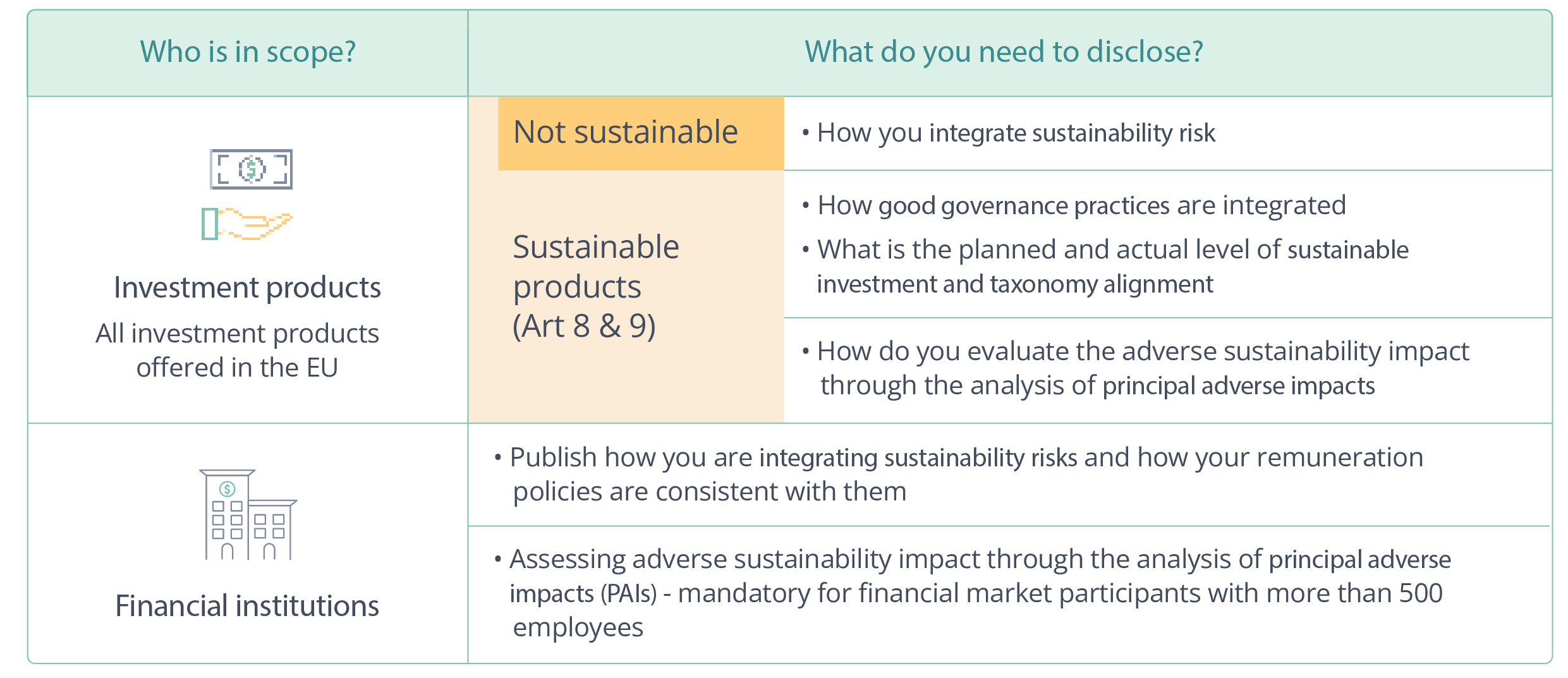
The Sustainable Finance Disclosure Regulation (SFDR), which requires reporting based on sustainability objectives (Figure 1), is also not prescriptive in its definition of a sustainable investment. In particular, Article 2(17) of this regulation requires asset managers who offer products identified as sustainable to inform investors of the proportion of their portfolio which meets the criteria for sustainable investment. But as illustrated in Figure 1, the regulation leaves the actual details of the criteria up to the asset manager. In this article we will outline the steps that Asset Managers can take to apply a defensible methodology and meet these requirements.¹

What Are the Requirements under the Article 2(17) of the SFDR?
Asset managers complying with SFDR need to show that a significant portion of the securities in their funds (close to 100% for Article 9 funds), pass three parts of Article 2(17) regulation listed in Figure 2. The complicated part of Article 2(17) comes when asset managers must determine which of the companies within their funds constitute sustainable investments and thus can be counted towards the total sustainable investment percentage.
A key differentiator between the SFDR article designations and other sustainability categorizations or ratings of funds is that the onus is on the fund manufacturer to determine the categorization and then provide information supporting their decision. Whether you are looking to report or want to leverage the EU Regulations for portfolio construction, here is a checklist that will walk you through all the required steps to ensure a fair and accurate view of how sustainable your portfolio is.
Checklist: How to Get Article 2(17) Right
Download Checklist
¹Clarity AI is actively engaged in the European Supervisory Authorities (ESAs) consultation to amend the regulatory technical standards (RTS) released in April 2023. We are aware of proposed amendments that would impact Article 2(17) and in particular the DNSH principle. We will contribute our expertise to the consultation and monitor developments very closely.