
2026 Guide | AI in Financial Services
EU Taxonomy, Regulatory ComplianceArticles

EU Taxonomy: Looking for Efficient, Accurate Reporting?

Published: October 3, 2022
Modified: October 3, 2022
Key Takeaways

Ensure your EU Taxonomy report is accurate and save time and money by leveraging technology

Whether you are looking for a more efficient way to report on EU Taxonomy, the broadest data coverage in the market, or the most reliable mapping of data to key taxonomy requirements (e.g., NACE code mapping) – you can find all of those with the help of advanced technology.

Download Brochure

First, EU Taxonomy reporting can be complex, but it doesn’t have to be. Often, those reporting are working through at least nine arduous steps to prepare their reports for regulators. What if instead of nine steps, you could do it in three? When the way to report is integrated directly into your workflow, you can experience more than a 50% gain in efficiency – including on the cost to report [See Figure 1].
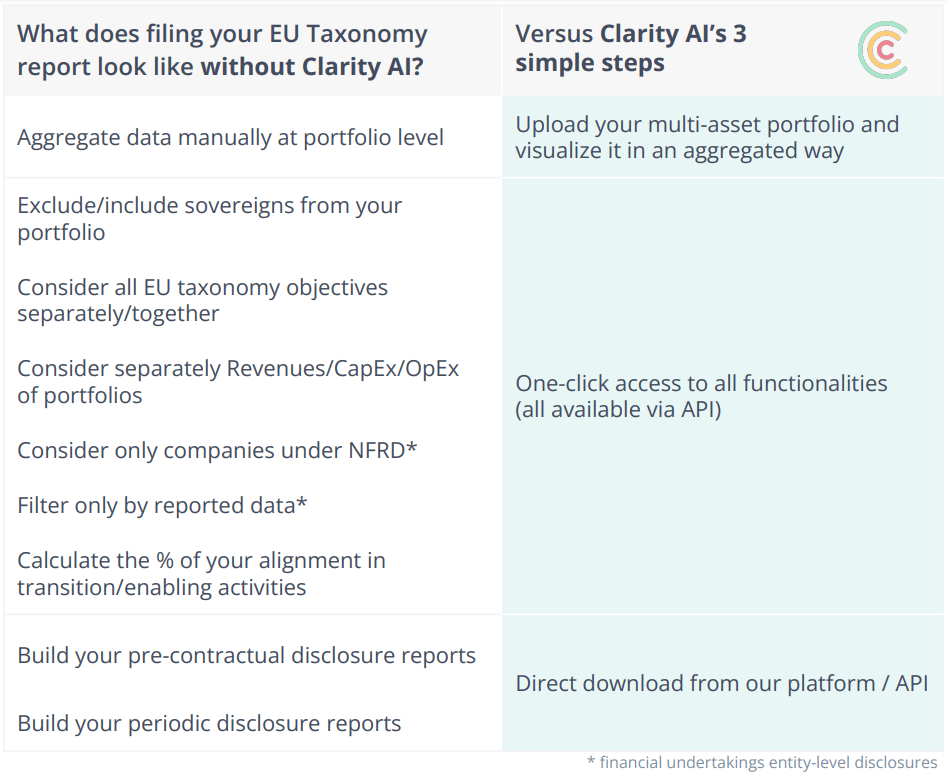
Figure 1: Clarity AI is more efficient than any other provider


Additionally, solving for data coverage can be a bear. Without the right coverage, reporting certainly won’t be easy – in fact, it may be impossible.  We have not only the largest reported-data database – more than five times as much as the closest competitor – and a full database of more than 40,000 companies [See Figure 2]
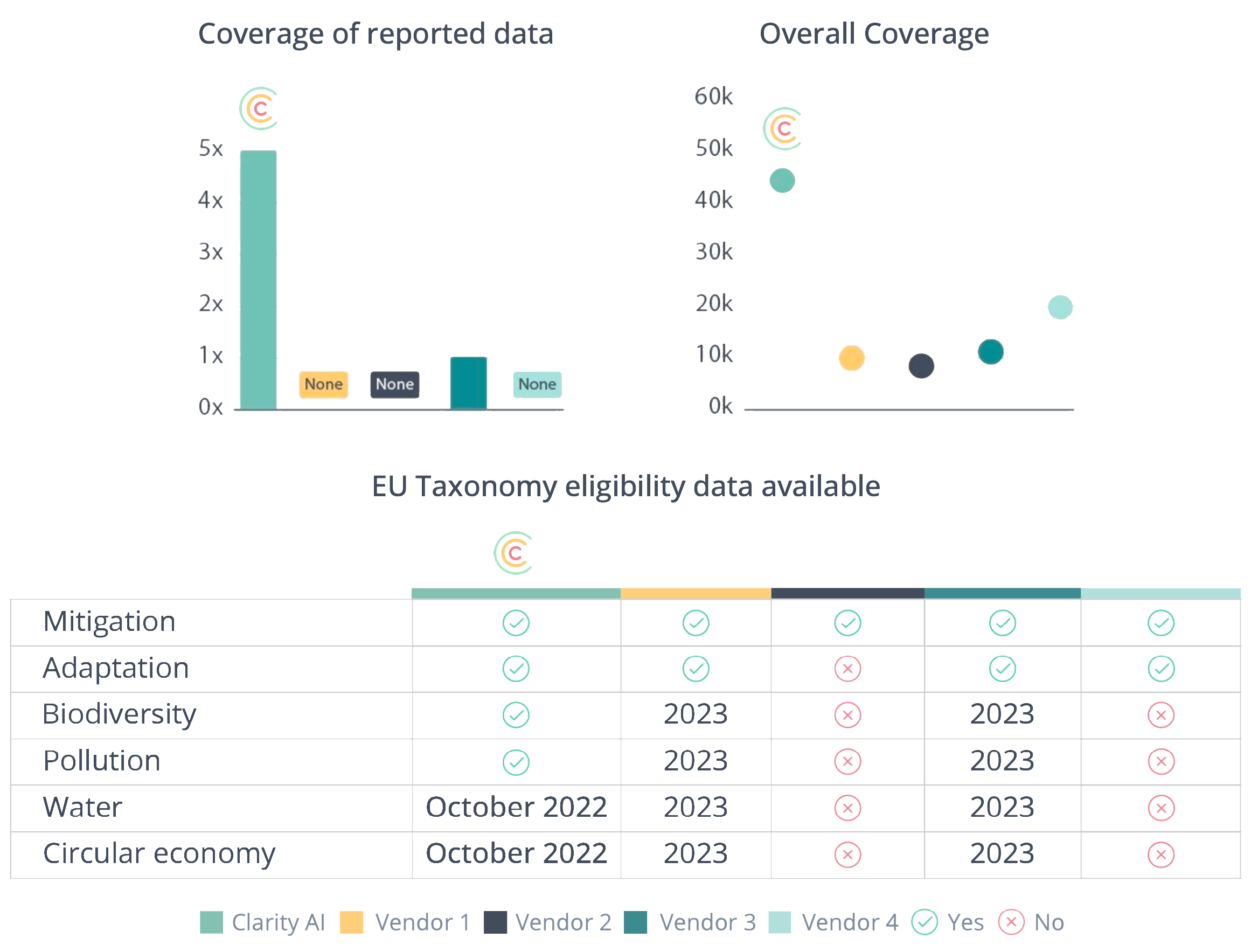
Clarity AI' coverage for EU Taxonomy
Figure 2: Clarity AI offers the broadest coverage in the market, with a coverage of reported data 5x more than any other provider


Lastly, we see other providers mapping EU Taxonomy activities incorrectly due to their treatment of NACE codes. To learn more about the pitfalls of reporting without leveraging advanced technology, please download our 6-pager to see case studies of inaccurate data in other providers’ systems and how that could affect your EU Taxonomy reporting.

Download Case Studies

Research and Insights

Latest news and articles

Regulatory Compliance

When the Rules Are Clear but the Expectations Are Not: Navigating Global Norms Screening in a Fragmented Supervisory Landscape

Across the EU, Financial Market Participants (FMPs) face an increasingly urgent compliance challenge, one that sits not in the complexity of the rules themselves, but in the absence of agreement on how to apply them. The regulatory texts that require global norms screening (SFDR's Principal Adverse Impact indicators, the ESMA Naming Rules, Paris-Aligned and Climate…

AI

AI in Financial Services: The decisions that separate winners from the rest

Learn how AI is reshaping financial services decision-making and what separates the firms that get it right.

Climate, Regulatory Compliance

The Scope 3 Illusion: Why European Financial Sector Emissions Are Now “Rising”

At first glance, recent data from the global financial sector contains a paradox: despite years of aggressive green regulations, the carbon intensity of European financial institutions appears to be rising steadily. But this "surge" is an illusion. The financial sector is not necessarily getting dirtier; its emissions are finally becoming visible. Exposing the emissions that…