
Research shows that SFDR PAIs coverage gaps are a main challenge of SFDR compliance
The European Union’s Sustainable Finance Disclosure Regulation (SFDR) could revolutionize sustainability reporting—and, in turn, rescope the data that companies track to measure their ESG performance. The purpose of SFDR is to improve the transparency of ESG disclosures by financial product and service providers. As not every piece of relevant data is available at scale yet, compliance with SFDR also requires financial market participants to somehow run before they walk.
In the intermediary phase, when data providers are in the process of ramping up their offer, this could be counterproductive and result in poor or misreporting. Data science can help.
Making the right data available at scale requires overcoming two main obstacles:
- Low reliability of reported data. This can occur because reported company data are fragmented and non-standardized, and conflicting or unreliable values exist across different providers.
- Incomplete data coverage of metrics and industry sectors. This occurs because of partial or nonexistent reporting.
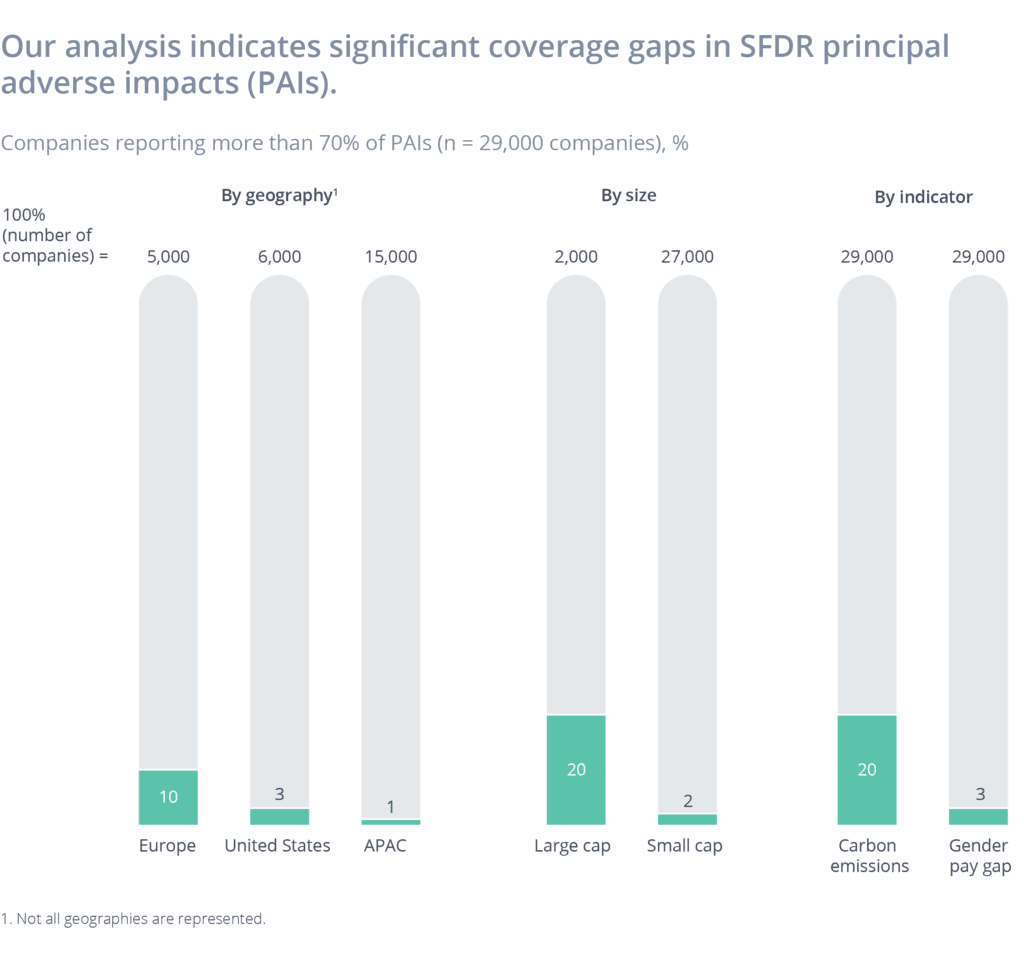
The figure below illustrates SFDR Principal Adverse Impacts (PAI) coverage gaps by geography, size, and selected indicators based on a Clarity AI data science–enabled analysis of 29,000 companies. Globally, only 3% of companies analyzed reported more than 70% of the 14 mandatory PAI. Europe leads the way with 10% of firms meeting this coverage threshold, while just 3% of US firms and 1% of APAC firms reported the same. One in five large-cap firms met the threshold, but just one in 50 small-cap firms did. Coverage also varies widely by indicator: 20% of the 29,000 firms disclose carbon emissions data, but just 3% do the same on gender pay gap data.
In addition to meeting the PAIs, SFDR requires evidence of inclusion of good governance practices and that companies account for the Do Not Significant Harm (DNSH) test—each of which comes with its own data coverage challenges. The implementation of the European Commission’s Corporate Sustainability Reporting Directive (CSRD) will help bridge the gap, eventually compelling close to 50,000 companies to report sustainability performance on a comprehensive set of metrics. CSRD will be fully implemented by 2025, and non- European jurisdictions are likely to lag even further behind.
SFDR reporting requirements add another layer of data to the 200 metrics that Clarity AI already provides to evidence performance on ESG risk and impact on the world, as well as alignment with climate targets (including those of the Task Force on Climate-related Financial Disclosures) and alignment the UN’s Sustainable Development Goals (SDGs). As a one-stop shop, Clarity AI also provides clients with robust and comprehensive solutions to meet their SFDR disclosure and product- design requirements, leveraging its data science capabilities.