
Understanding the Impact of Non-Financial Disclosures on ASEAN’s Growing Economy
The Association of Southeast Asian Nations (ASEAN) boasts an impressive combined GDP of nearly $4 trillion, which would position it as the 5th largest economy in the world. With a projected GDP growth of 4.6% in 2023, it is evident that the region is a significant player on the global economic stage, outperforming the European Union’s expected growth of 0.6% for the same year. The ASEAN region also holds considerable assets under management (AuM) amounting to almost $5.5 trillion, with Singapore dominating as the major financial hub managing over 90% of the AuM¹.
As non-financial disclosures gain importance in investment decisions worldwide, the improvement of such disclosures in the ASEAN countries, particularly in Singapore, presents a massive opportunity to accelerate sustainable finance. Countries like Malaysia, the Philippines, Vietnam, and Singapore are already in the process of developing or drafting their National Taxonomies, while the ASEAN area is working on a Regional Taxonomy to create a common language for economic activities and financial instruments.
ASEAN Taxonomy: Challenges and Opportunities
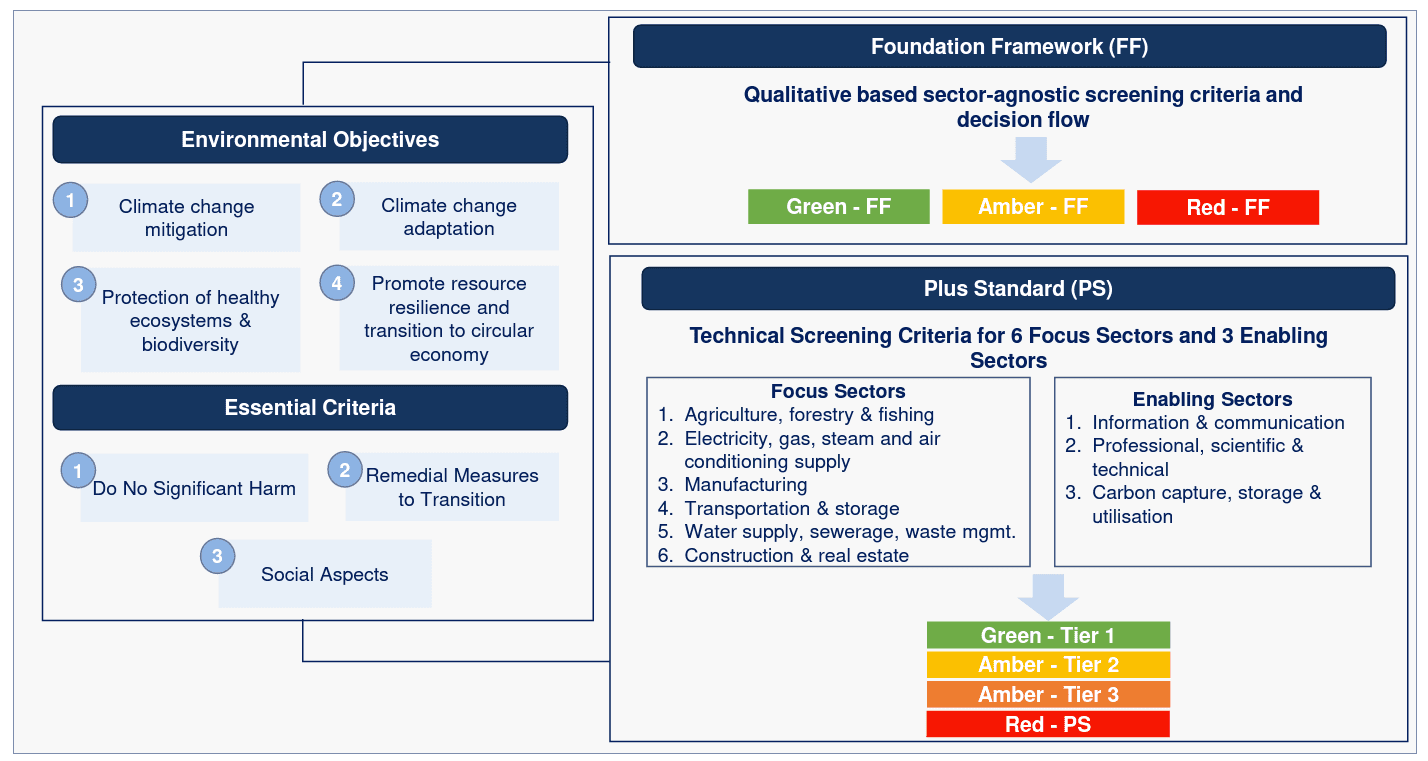
The ASEAN Taxonomy is designed to promote interoperability across markets, but some key points still need clarity. It is not legally binding and may face challenges in application if not enforced. Moreover, data reported by companies might not undergo third-party verification, raising concerns about sustainability data quality and reliability.
The multi-tiered approach of the ASEAN Taxonomy offers flexibility but adds complexity. Users may find it challenging to track how different member states assess the same economic activity under various thresholds. Additionally, as not all activities align with a “net zero by 2050” goal, interoperability with other taxonomies, especially from more stringent jurisdictions like the European Union, could pose uncertainties for investors.
The Case for Singapore: ESG Disclosures Already Apply while the Taxonomy is Still a Work in Progress
The Singapore Taxonomy is still in its fourth consultation phase, and stakeholders’ requirements have not been published yet. While it remains unclear how it will be applied, the Singapore Stock Exchange (SGX) has already taken steps toward climate reporting by implementing a “comply or explain” basis for listed companies. Climate reporting will become mandatory for issuers in the financial, agriculture, food and forest products, as well as energy industries for fiscal year 2023. Those in materials and buildings, and transportation industries will have to comply for FY 2024. This requirement will gradually expand to encompass more industries, aligning with the forthcoming Taxonomy’s focus on climate change.
The Monetary Authority of Singapore (MAS) and associations such as the Association of Banks in Singapore have issued guidelines for financial institutions, private banking, wealth management, and retail ESG funds, although not all the regulations are binding. However, a positive trend is visible: we observe good compliance by companies with SGX recommendations and also many Singapore-based funds disclosing under Article 8 and 9 of the EU’s SFDR, something that automatically translates into compliance with guidance issued by MAS on retail ESG funds.
The Path Forward
As the ASEAN region continues to grow economically, the development of National and Regional Taxonomies presents a significant opportunity for investors seeking to align their portfolios with sustainable practices. Despite some challenges and uncertainties, the potential impact of improved non-financial disclosures in ASEAN countries, especially Singapore, should not be underestimated.
By embracing sustainability reporting and adopting internationally recognized standards, the region can attract global investors looking to invest in a greener and more socially responsible future. Moreover, as Singapore finalizes its Taxonomy and reveals details of its application, clarity on timelines and compliance expectations will be crucial for stakeholders.
As the world moves towards a more sustainable future, embracing standardized and transparent reporting frameworks will not only attract responsible investments but also bolster ASEAN’s position as a major player in the global economy.
¹ AuM is calculated using the ratio of assets of mutual funds to GDP, provided by the World Bank