

KEY TAKEAWAYS
Financial advisory firms face multiple challenges to comply with new sustainability requirements
Despite being applicable since August 2, the new MiFID II directive is still creating confusion in the market, with various interpretations of what is and is not compliant.
For example, some financial advisory firms are relying on ESG scores to classify their products. This is not only inaccurate, but it’s directionally opposed to what regulators are expecting from this new directive. It is important to remember that not all ESG data can be used to match clients’ sustainability preferences with financial products, and that failing to source the right dataset can put the firm at reputational risk.
Access Case Study
Right now, advisors are accessing the data in two ways: through EETs (European ESG templates) provided by fund manufacturers and through data providers.
Sourcing data through EETs
Relying solely on EETs is currently a cause of frustration as funds manufacturers are also affected by the lack of ESG data. Therefore, very often, EETs give financial advisors little to no information on how sustainable products really are, reducing the availability of sustainable products, and hindering the confidence to offer those that seem to exist.
Another potential issue with EETs is the lack of sustainability expertise of the advisors. Not only are advisors expected to analyze a very technical document but also identify if there are any inconsistencies in the information.
Sourcing data through third-party providers
Data providers, on the other hand, can make the process more efficient, as long as they offer full transparency into their methodology and sound sustainability and regulatory expertise. Choosing the wrong provider can lead not only to inefficiencies that will incur higher costs but ultimately to regulatory scrutiny and greenwashing accusations.
Overcoming the data challenges through advanced technology
To help financial advisors meet regulatory standards, Clarity AI has developed a reliable and accurate methodology to comply with the new MiFID II directive. In line with one of Clarity AI’s core principles –transparency– this methodology is fully accessible to clients.
The solution is built on our market-leading SFDR and EU Taxonomy data, exactly as required by the regulation. We leverage technology to increase coverage, as well as the reliability and accuracy of the data for funds, fixed income, and equities.
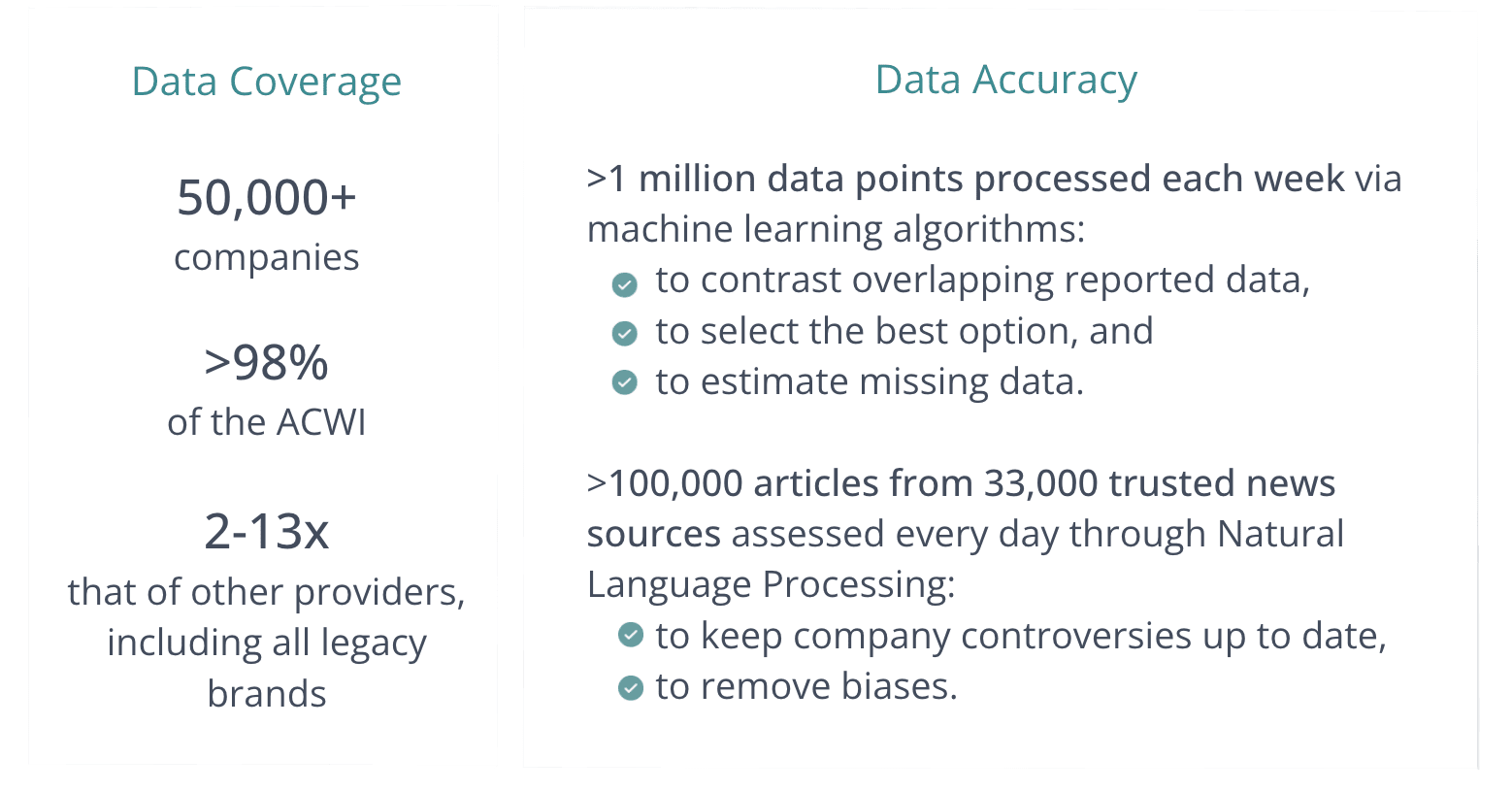
Since EETs contain first-hand information from fund manufacturers, our solution ingests and processes over 10,000 EETs to succinctly present this reported information to financial advisors. To fill the many data gaps left by the EETs we supplement missing data with our own, always making the source available.
Clarity AI avoids adding further complexity to your current processes
Complying with new requirements is synonymous with an increase in costs, including employee training, and change management. Turning to a solution that helps compliance without adding complexity can therefore become a lifesaver. Relying on tech-powered solutions can make this happen.
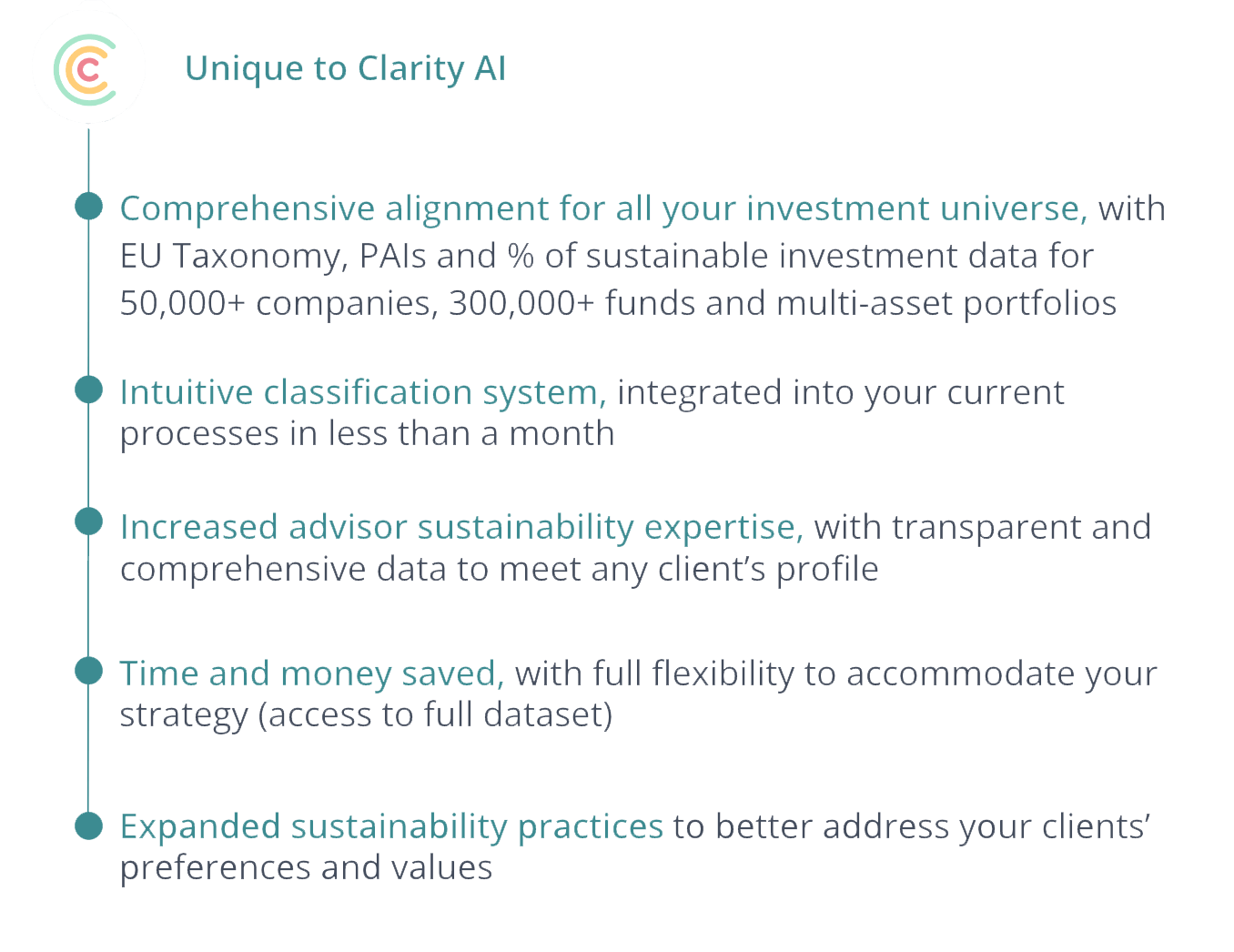
Clarity AI’s automated and ready-to-use SaaS can be integrated into the existing process in less than a month, and can be customized to accommodate any strategy.
Beyond compliance: How MiFID II can help you deliver a superior customer experience
At Clarity AI, we believe that Green MiFID is the starting point for a more personalized experience in the financial advisory space, bringing to life the values and beliefs of clients. Asking for sustainability preferences –as it is now regulated by MiFID II– should evolve into a deeper conversation about world issues clients care about. Is it gender equality? Is it biodiversity? Is it animal welfare? Peace? Adjusting financial decisions to their values will not only result in higher satisfaction and retention rates for the firm but also in a more meaningful impact on the planet.
Download below a full brochure on our MiFID II solution. You can request a demo at any time by clicking the button on the top right corner of the page.