
2026 Guide | AI in Financial Services
EU Taxonomy, Regulatory ComplianceArticles

EU Taxonomy: Looking for Efficient, Accurate Reporting?

Published: October 3, 2022
Modified: October 3, 2022
Key Takeaways

Ensure your EU Taxonomy report is accurate and save time and money by leveraging technology

Whether you are looking for a more efficient way to report on EU Taxonomy, the broadest data coverage in the market, or the most reliable mapping of data to key taxonomy requirements (e.g., NACE code mapping) – you can find all of those with the help of advanced technology.

Download Brochure

First, EU Taxonomy reporting can be complex, but it doesn’t have to be. Often, those reporting are working through at least nine arduous steps to prepare their reports for regulators. What if instead of nine steps, you could do it in three? When the way to report is integrated directly into your workflow, you can experience more than a 50% gain in efficiency – including on the cost to report [See Figure 1].
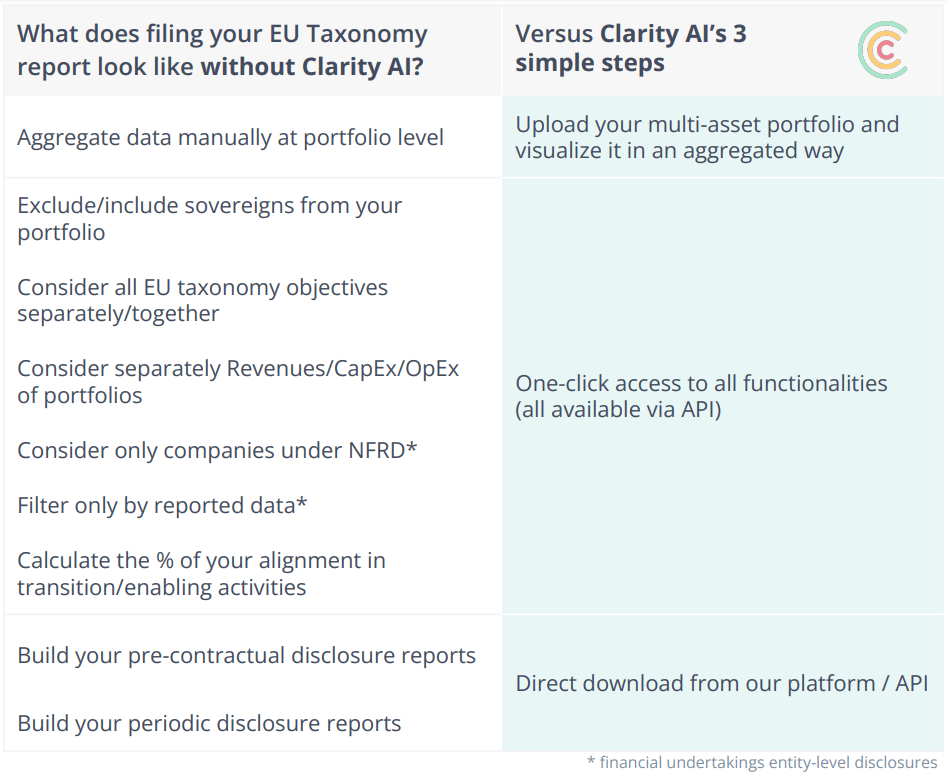
Figure 1: Clarity AI is more efficient than any other provider


Additionally, solving for data coverage can be a bear. Without the right coverage, reporting certainly won’t be easy – in fact, it may be impossible.  We have not only the largest reported-data database – more than five times as much as the closest competitor – and a full database of more than 40,000 companies [See Figure 2]
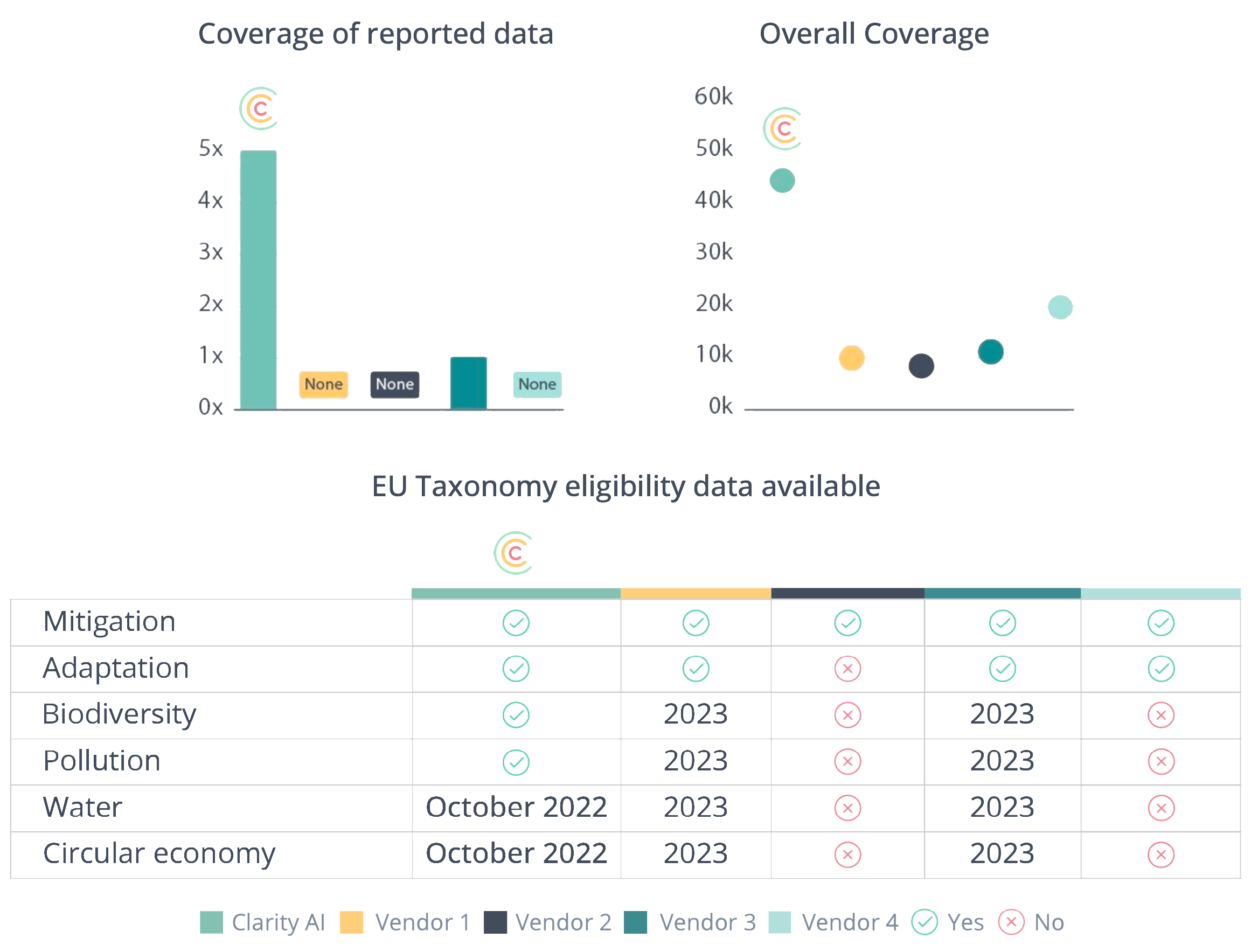
Clarity AI' coverage for EU Taxonomy
Figure 2: Clarity AI offers the broadest coverage in the market, with a coverage of reported data 5x more than any other provider


Lastly, we see other providers mapping EU Taxonomy activities incorrectly due to their treatment of NACE codes. To learn more about the pitfalls of reporting without leveraging advanced technology, please download our 6-pager to see case studies of inaccurate data in other providers’ systems and how that could affect your EU Taxonomy reporting.

Download Case Studies

Research and Insights

Latest news and articles

Market Insights

How Investors Are Navigating Geopolitical Risk

Geopolitical risk has always been priced into investment decisions, but rarely has it demanded a rethink of the assumptions beneath them. Today it does. The question facing long-term investors is no longer whether geopolitical events move markets. It is whether the frameworks built over decades to guide portfolio construction, exclusion policy, and asset allocation still…

ESG Risk, Gender Equality

The diversity say-do gap: Two-thirds of companies with discrimination violations also claim diversity initiatives

June is a month when corporate communications are filled with Pride messaging, diversity commitments, and inclusion statements. But beyond the visibility of these declarations, a more complex question remains: do these commitments consistently align with companies’ actual conduct? At Clarity AI, we looked at whether companies with active discrimination controversies in practice also publicly emphasize…

Climate

The physical risk gap: What today’s datasets are missing

Access to physical risk data is no longer the problem. Most asset managers who need it have it. Far fewer have data that holds up when it matters: under regulatory scrutiny, in client reporting, or when trying to act on it. Taking place in the heart of the climate week season, after Zurich and London,…